And why
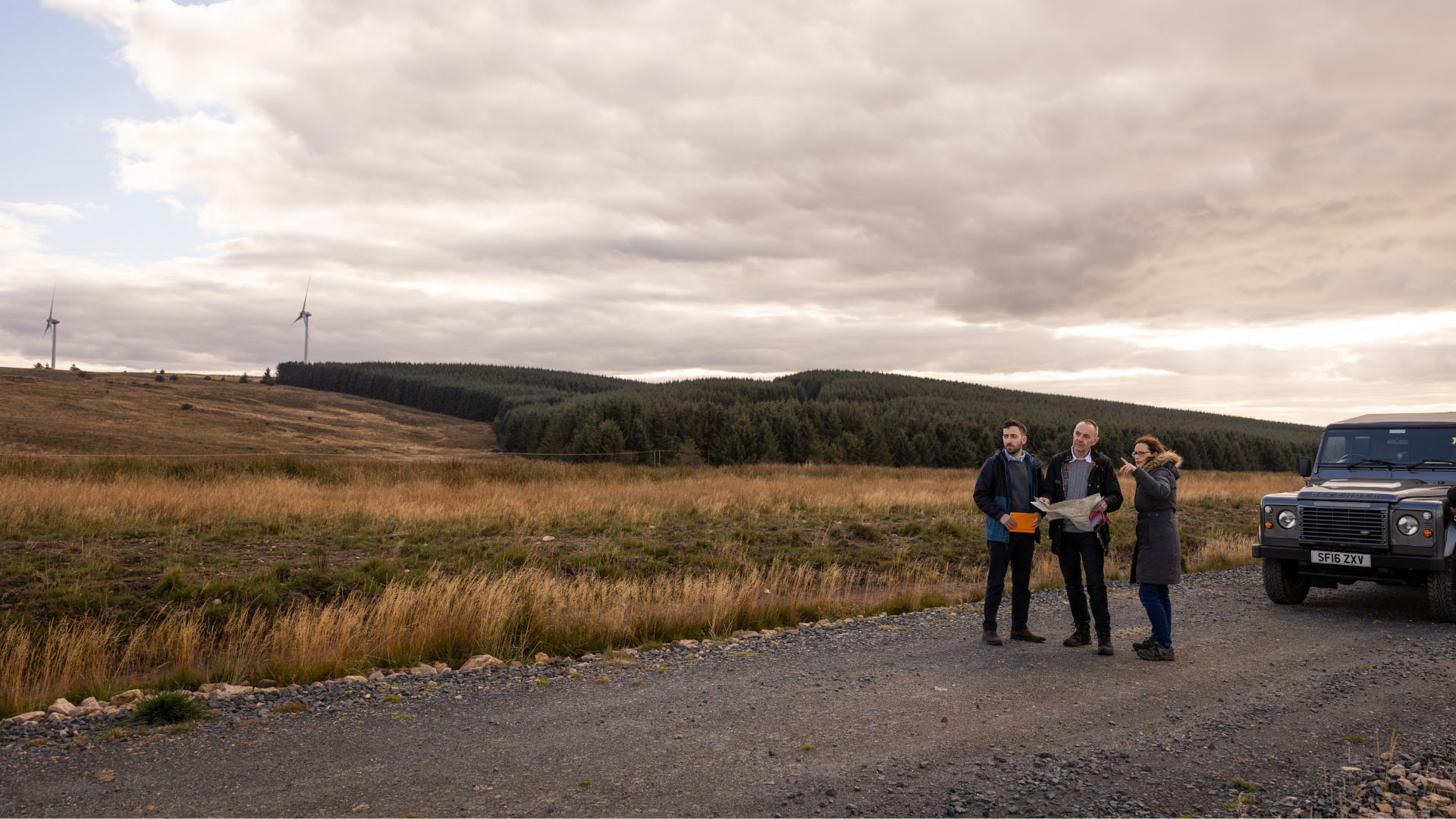
We take projects from initial ideas through every stage of the development process - from site identification and environmental assessments to land agreements, planning consents, and grid connections.
By focusing exclusively on development, we deliver high-quality, de-risked projects that our long-term joint venture partners then take forward into construction and operation.
Everything we do is driven by a commitment to building a more sustainable future. Each project we develop helps accelerate the transition to clean energy, reduces carbon emissions, and creates lasting value for communities and future generations.
So far
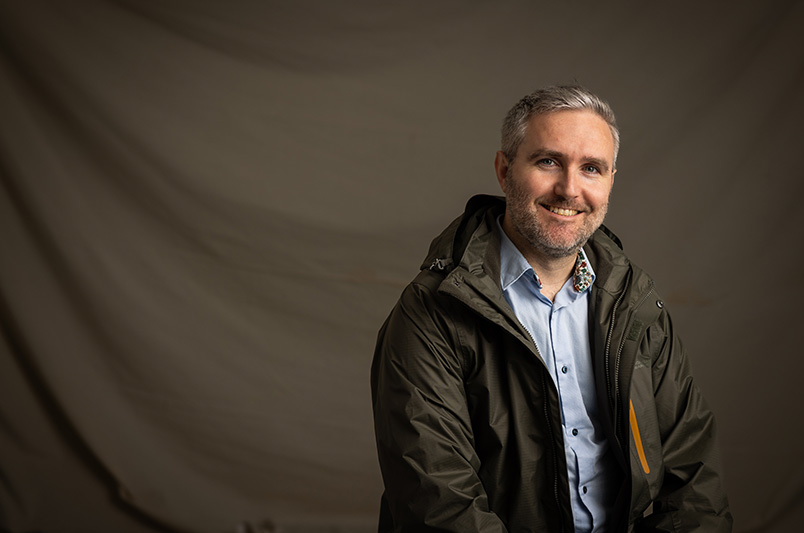
"Between us, we’d spent nearly 30 years in renewable energy. Over time, we came to believe that project development works best in an entrepreneurial environment. Big utilities—with all their layers of process and red tape—just aren’t built for that. We also felt that project managers should have real ownership of the projects they lead—not feel like cogs in a corporate machine. That sense of drive is what makes projects happen. We wanted to build a company where that culture came first."
— David Murray, Managing Director
Leaving behind secure jobs was a big step, but we believed in our approach and were ready to take the risk. From day one, our strategy was to work closely with long-term asset owners—companies that would ultimately build and operate the projects. This gave them a role in shaping designs, building lasting relationships with landowners, and providing funding to move projects forward.
Our first partnership was with Falck Renewables (now part of Nadara), a company with a strong UK wind portfolio and ambition to grow. With a team of just five, we aimed to develop 100 MW—but surpassed that in under a year. Planning permissions followed four years later, and our first project became operational three years after that.
By 2014, we had around 300 MW in development. But as UK political support for onshore wind waned, Falck reduced its exposure to new UK projects—prompting us to find a new partner.
That search led us to ESB, the Irish state-owned utility. They brought strong technical capabilities, capital, a presence in Ireland, and a clear ambition to expand in Great Britain. Just as importantly, they saw the value Coriolis could bring.
Our joint venture launched in 2015 with seven projects. Since then, the portfolio has more than doubled in size. Our first project with ESB completed in 2019, and to date, six projects—totalling over 500 MW—have secured planning permission.
Our largest project to date, Chirmorie Wind Farm—with 20 turbines standing 150m tall—is due to begin construction in 2026 and will generate enough electricity to power 67,000 homes. More ESB-backed projects are set to follow from 2027 onwards.
Today, Coriolis Energy has over 1,500 MW either operational or in development, supported by teams across three UK offices. Looking back to 2007, that progress feels remarkable. We’re proud not just of what we’ve built—but of the positive impact we’re making on a cleaner, more sustainable future.
2007 Onwards
Copy required for this intro section
Coriolis Energy formed by part of the former management team of nPower Renewables (then the UK’s largest renewable energy business) Joint venture established with Falck Renewables (now part of Nadara) to identify and develop an initial portfolio of 100MW of new onshore wind farms in the UK.

First four projects identified and development work begun in earnest First employees recruited (most of whom are still with the company)

Glasgow office opened. First planning application submitted (for Spaldington Airfield Wind Farm)

First planning permissions received (for West Browncastle and Spaldington Airfield Wind Farms)

First project developed by Coriolis Energy enters commercial operation (West Browncastle Wind Farm) Planning permission granted for first Farm Turbine (Pittsdown)

New joint venture formed with ESB (the largest electricity utility in Ireland, majority owned by the Irish Government)

Operational capacity for wind farms developed by Coriolis Energy passes 100MW

Development work on first ESB joint venture project completed (Kirk Hill Wind Farm) Coriolis and ESB selected by Natural Resources Wales (a Welsh Government Agency) to develop a project in Y Bryn forest

Coriolis and ESB selected by Forestry and Land Scotland (a Scottish Government Agency) to develop projects in two Scottish forests (details not yet in the public domain) Development portfolio tops 1,000 MW
Joint Venture with ESB expanded with the addition of five new projects identified by Coriolis Energy (not all of which are yet in the public domain)

Harrogate office opened

Planning permission secured for a total of 43 wind turbines across 2 projects (Glendye 120MW and Kirkan 70MW)

Planning permission granted for first energy reserve project (Orrell, 70MW)

Planning permission secured for largest project to date (Garvary, 144MW)
Quick Q&A’s
Read our mini interviews with some of the Coriolis Energy team to find out what they do, and what makes them tick.
Answer
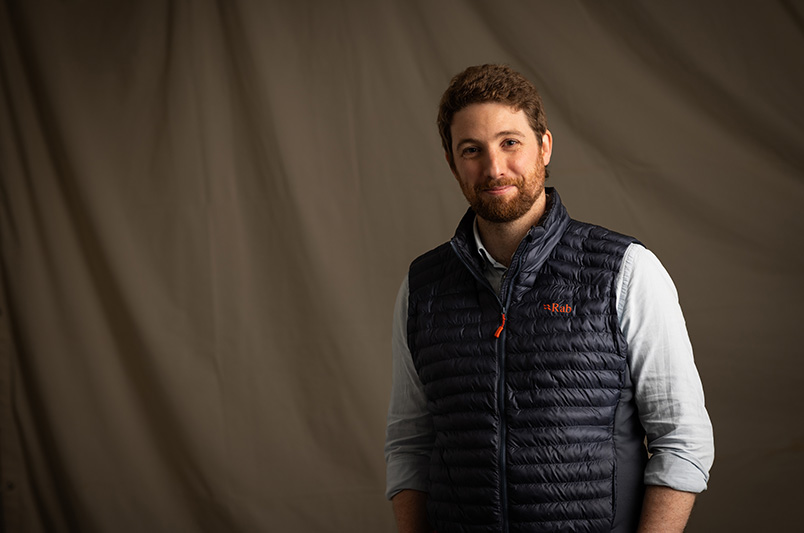
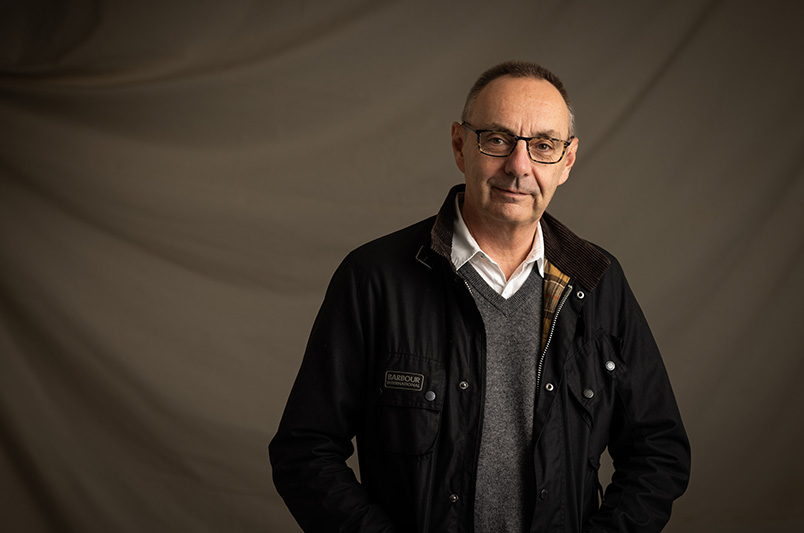
I see my role as trying to create the right environment for our development team to be able to focus on successfully delivering projects. I also take the lead on managing relationships with our partners and, given my background, also oversee the commercial aspects of the business.
My previous role was Head of Commercial and acting General Manager of nPower Renewables. Prior to that, I worked in business development for an Australian landfill gas power generation company, and I began my career in sales and marketing in the civil aircraft industry. I hold a degree in Aeronautical Engineering and an MBA.
I love being able to make things happen - the freedom to take decisions quickly and move projects forward. My greatest satisfaction comes from seeing the practical results of our work: Projects we have developed being built and making an impact.
Work and kids are pretty much all-consuming, but when I get the chance I enjoy travelling and photography. I also play squash to try and keep fit, but not as often as I should.

Lorem ipsum dolor sit amet, consectetur adipiscing elit. Quis tibi ergo istud dabit praeter Pyrrhonem, Aristonem eorumve similes, quos tu non probas? Prioris generis est docilitas, memoria; At modo dixeras nihil in istis rebus esse, quod interesset. Res enim se praeclare habebat, et quidem in utraque parte. Duo Reges: constructio interrete.
Lorem ipsum dolor sit amet, consectetur adipiscing elit. Quis tibi ergo istud dabit praeter Pyrrhonem, Aristonem eorumve similes, quos tu non probas? Prioris generis est docilitas, memoria; At modo dixeras nihil in istis rebus esse, quod interesset. Res enim se praeclare habebat, et quidem in utraque parte. Duo Reges: constructio interrete.
Lorem ipsum dolor sit amet, consectetur adipiscing elit. Quis tibi ergo istud dabit praeter Pyrrhonem, Aristonem eorumve similes, quos tu non probas? Prioris generis est docilitas, memoria; At modo dixeras nihil in istis rebus esse, quod interesset. Res enim se praeclare habebat, et quidem in utraque parte. Duo Reges: constructio interrete.
Lorem ipsum dolor sit amet, consectetur adipiscing elit. Quis tibi ergo istud dabit praeter Pyrrhonem, Aristonem eorumve similes, quos tu non probas? Prioris generis est docilitas, memoria; At modo dixeras nihil in istis rebus esse, quod interesset. Res enim se praeclare habebat, et quidem in utraque parte. Duo Reges: constructio interrete.